The Land and Water Continue to Heat the Air After the Sun Sets
On a hot early afternoon, take a walk along a dry beach. You start hopping and leaping as soon as you place your bare feet in the sand and sprint towards the sea to soak your burning feet in the water. Yes, the sun warms them both. Land and water, on the other hand, do not heat up or cool down at the same rate. In coastal areas, the differential heating and cooling of land and water create breezes. A sea breeze is any wind that blows from a large water body towards a landmass. Whereas, the offshore winds are called a land breeze that arises from land. The main difference is because of the property of water to retain heat for a longer duration as compared to land. Here, we will discuss more about the land and sea breeze along with some important questions.
Also read: Difference between Land Breeze and Sea Breeze
What is a Breeze?
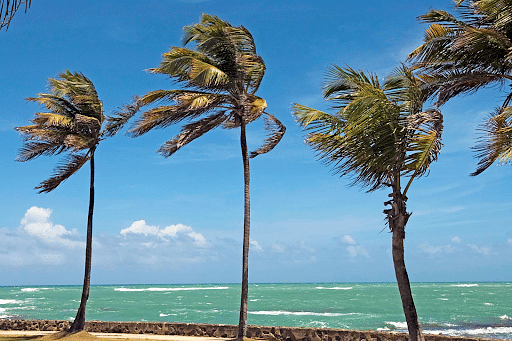
Breeze, the light and cold wind is one of the most wonderful sensations to feel a cold and moderate wind on a hot summer day at the beach.
The breeze is classified into two types:
- Sea Breeze
- Land Breeze
The primary distinction between the two forms of Breeze is that water maintains heat for a longer period of time. The temperature differential between land and water produces a change in the density of the air over their respective surfaces. The Breeze is generated by the alternating airflow induced by the consequent low pressure. People who live near the shore get cold sea breezes during the day and warm land breezes at night. These breezes also have an impact on the temperature, humidity, and precipitation rates.
Also check:
What is Land Breeze?
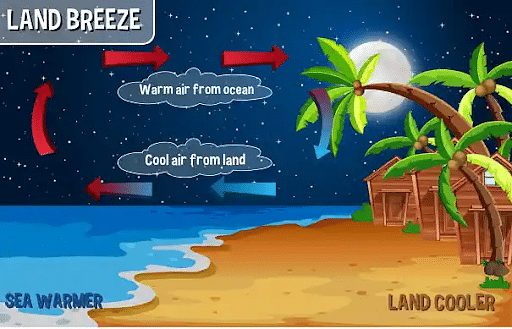
A land breeze or offshore wind is the flow of wind from land to the water body. This procedure continues throughout the night, and the preceding process is reversed. When the sun sets, both the land and the water begin to chill. Because the heat capacity of the land differs from that of the water, it cools down faster. As a result of the greater temperature over the water compared to the land, a low-pressure condition occurs over the sea. As a result, air rushes from the land to the sea, giving rise to the phrase "land breeze."
How Does Land Breeze Occur?
The following diagram depicts how the land wind is formed:
- Because there is no sun to give heat throughout the night, the land cools fast and warms up the surrounding air.
- However, as compared to land, aquatic bodies hold heat for a longer period of time, causing the air above them to have a lower density and rise.
- High pressure builds up over the land, whereas low pressure builds up above the ocean.
- The flow of thick air over the ground occurs over water from land to space.
- The refrigerator The breeze originates from the coast and is known as a land breeze because the winds flow from high pressure to low-pressure zones.
Also check:
What is Sea Breeze?
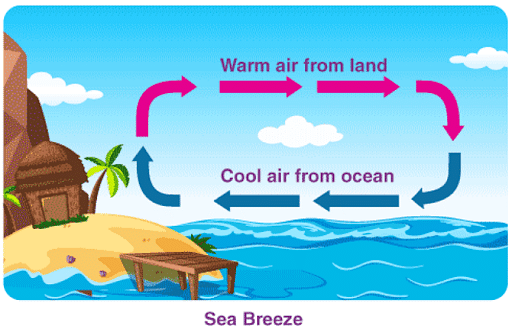
Sea breeze flows during the day and this procedure is repeated throughout the day. The sun heats both the water and the land surface. Because the water has a considerably larger heat capacity than the land, it heats up more slowly. As a result, the temperature over the ground surface rises, heating the surrounding air. Expansion happens in the less dense warm air, resulting in the formation of a low-pressure region above the continent. At the same time, a high-pressure region forms on the sea's surface. Because of the pressure differential, air flows from the high pressure over the sea to the low pressure over the land. The sea breeze is the movement of air from the sea to the land.
During the spring and summer, the sea wind is more prominent on warm, sunny days. As a result, it has a remarkable cooling effect and causes a considerable temperature reduction.
How does Sea Breeze Occur?
The following formations depict the development of a sea breeze:
- During the day, the sun quickly heats up the ground.
- The air above the sea is cooler than the air above the land.
- Because the warmer air above the ground is less dense, it begins to ascend in the air.
- Low pressure is created.
- As the warm air from the land rises, the denser air above the water rises to fill the gap above the land. A sea breeze is a name given to this colder air.
Also read: Difference between Renewable and Non-renewable Resources of Energy
Things to Remember
- Both winds are common near coastal locations. The land and sea winds influence precipitation rates, air temperature, and humidity levels.
- Land winds are caused by land, whereas sea breezes are caused by the sea or other big bodies of water.
- The crucial difference is due to water's ability to hold heat and warm up for a longer period of time than land.
- Offshore winds are referred to as a land breeze, whereas onshore winds are referred to as a sea breeze.
- A land wind occurs at night, whereas a sea breeze occurs during the day.
- Land winds are more prevalent in the autumn and winter months, whereas sea breezes are more prevalent in the spring and summer months.
- Sea winds are typically stronger than land breezes. As a result, sea breezes are extremely essential to glider pilots and other associated aircraft operators.
- Land winds are often milder than sea breezes.
- Land breezes are typically dry winds, but sea breezes include more moisture.
- Land winds, as opposed to sea breezes, are predominant throughout the winter months.
- Sea breezes, unlike land breezes, can suggestively reduce air temperature.
Sample Questions
Ques: What is meant by sea breeze? (3 marks)
Ans: The sea breeze is the movement of winds from large water bodies like sea and ocean and they are also called onshore winds. As there is more temperature difference between the land and the adjacent water bodies, the occurrence of these breeze takes place at the time of the spring and summer season. This is mostly observed in the afternoon when the land temperature reaches the maximum heat level. Compared to the land breezes, the sea breezes are more reliable in the winter season, which also leads to the vast temperature difference between the sea and land, and this might also cause thunderstorms.
Ques: How does land breeze take place? (5 marks)
Ans: The following forms outlines how the land breeze is formed:
- At night, the land cools down quickly due to the absence of sun to provide the heat but heats up the surrounding air.
- Water bodies retain the heat for a longer duration compared to the land, which makes the air above it have a lower density and rise.
- High pressure is formed above the land and at the same time, low pressure is also formed above the water.
- The movement of the dense air above the land occurs from land to the space over water.
- As the movement of the winds takes place from high pressure to low-pressure areas, the cooler breeze comes from the seashore which is the land breeze.
Ques: What do you mean by the land breeze? (3 marks)
Ans: A land breeze or offshore wind is the flow of wind from land to the water body. This procedure continues throughout the night, and the preceding process is reversed. When the sun sets, both the land and the water begin to chill. Because the heat capacity of the land differs from that of the water, it cools down faster. As a result of the greater temperature over the water compared to the land, a low-pressure condition occurs over the sea. As a result, air rushes from the land to the sea, giving rise to the phrase "land breeze."
Ques: How does sea breeze occur? (4 marks)
Ans: The following formations depict the development of a sea breeze:
- During the day, the sun quickly heats up the ground.
- The air above the sea is cooler than the air above the land.
- Because the warmer air above the ground is less dense, it begins to ascend in the air.
- Low pressure is created.
- As the warm air from the land rises, the denser air above the water rises to fill the gap above the land. A sea breeze is a name given to this colder air.
Ques: Differentiate between the land breeze and sea breeze. (5 marks)
Ans:
| Land Breeze | Sea Breeze |
|---|---|
| A land breeze is comparatively shallower than a sea breeze. | The sea breeze is much denser. |
| Generally, the land breeze has no effect on temperature. | The sea breeze has an effect on the temperature as it reduces the temperature. |
| A land breeze is more common during winters and autumns. The nights are cooler at such times. | A sea breeze is more common during the summer and spring seasons. This happens because temperatures remain higher in the day. |
| The land breeze flows much slower, with the highest speeds ranging up to 8 knots. | The sea breeze is faster, flowing at speeds of up to 20 knots. |
royalswoundescous64.blogspot.com
Source: https://collegedunia.com/exams/land-breeze-and-sea-breeze-explanation-occurrence-science-articleid-2219
0 Response to "The Land and Water Continue to Heat the Air After the Sun Sets"
Post a Comment